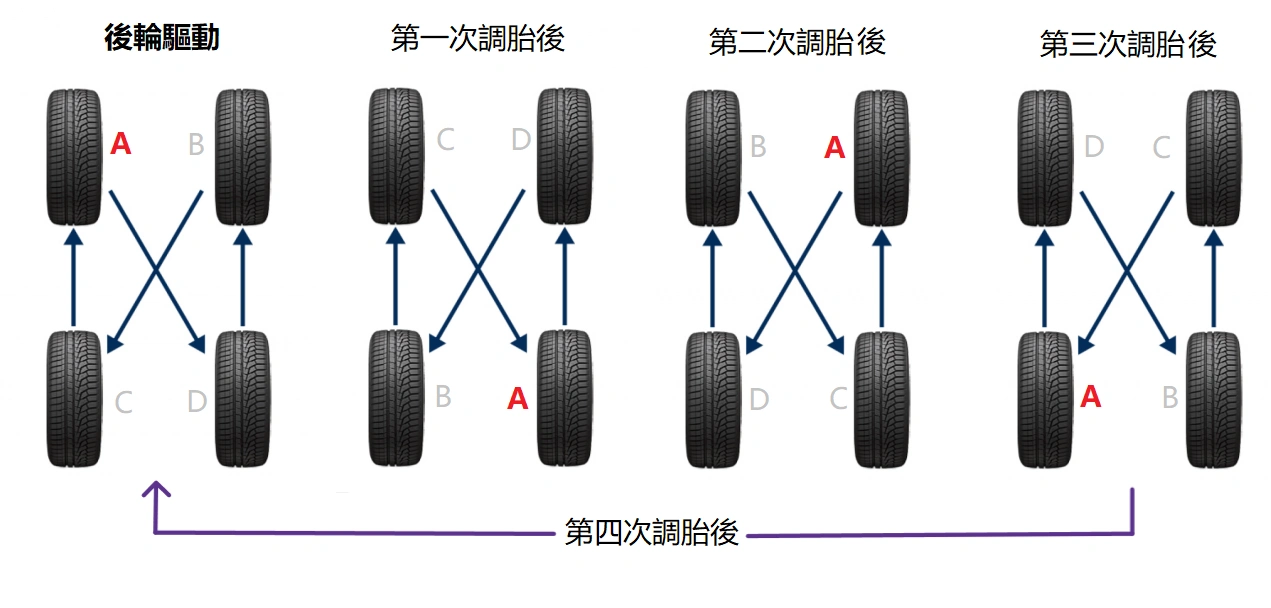
Tire Rotation Guide | NHTSA/JATMA Recommended Patterns for FWD, RWD, and AWD
It is a well-known rule of thumb that tires should be rotated every 5,000 km to ensure even tread wear. This practice effectively extends the service life of your tires and prevents “uneven wear” (commonly known as cupping or feathering).
While there are various rotation methods on the market, the guidelines provided by the NHTSA (National Highway Traffic Safety Administration) in the U.S. and JATMA (Japan Automobile Tyre Manufacturers Association) are identical and highly regarded as the industry standard.
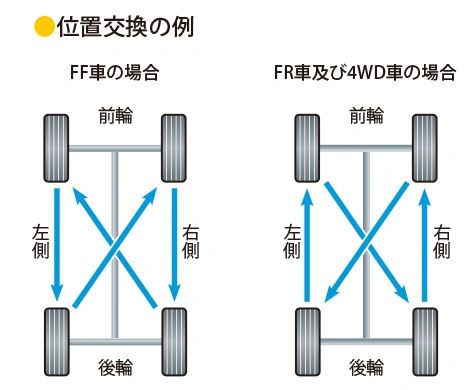
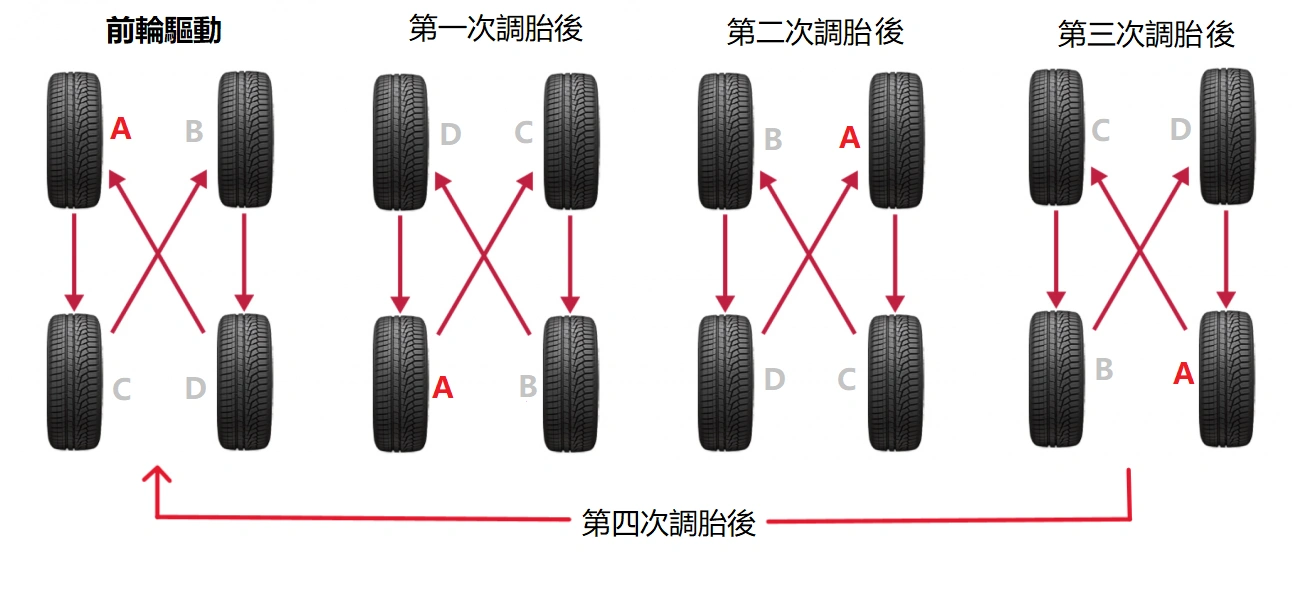
By following these patterns, each tire will have occupied all four positions on the vehicle after three rotations. This is a scientifically sound and clever way to manage tire health. Next time you visit a tire shop, you can ask the technician to follow these specific sequences.
NHTSA / JATMA Standard Rotation Overview
If you prefer not to memorize the diagrams, you can follow this simple logic: “Drive wheels move straight, non-drive wheels cross.”
| Drive Type | Front Tire Movement | Rear Tire Movement | Rotation Logic |
|---|---|---|---|
| Front-Wheel Drive (FWD) | Move Straight to Rear | Move Cross to Front | Drive wheels (Front) move straight; Non-drive wheels (Rear) cross. |
| Rear/All-Wheel Drive (RWD/AWD) | Move Cross to Rear | Move Straight to Front | Drive wheels (Rear) move straight; Non-drive wheels (Front) cross. |
Front-Wheel Drive (FWD) Pattern
Since the front tires on FWD vehicles handle both steering and power delivery, they tend to wear out faster. When rotating, the rear tires move to the front in a cross pattern, while the front tires move straight back to the rear.
Rear-Wheel Drive (RWD) & All-Wheel Drive (AWD) Pattern
For RWD or AWD vehicles, the logic is the exact opposite of FWD. The front tires move to the rear in a cross pattern, while the rear tires move straight up to the front.