Technical Notes: Transmission Oil Circuits and Filter Systems
The animation above clearly demonstrates how transmission fluid (ATF) circulates:
- The Oil Pump draws fluid from the Oil Pan (Sump). It first passes through the Filter/Strainer, and then divides into two primary flow paths:
- One path leads to the Torque Converter.
- The other path leads to the Gear Mechanism and Valve Body.
- The fluid circulates through the valve body and gears, eventually draining back into the oil pan.
Transmission Oil Circuit Diagrams
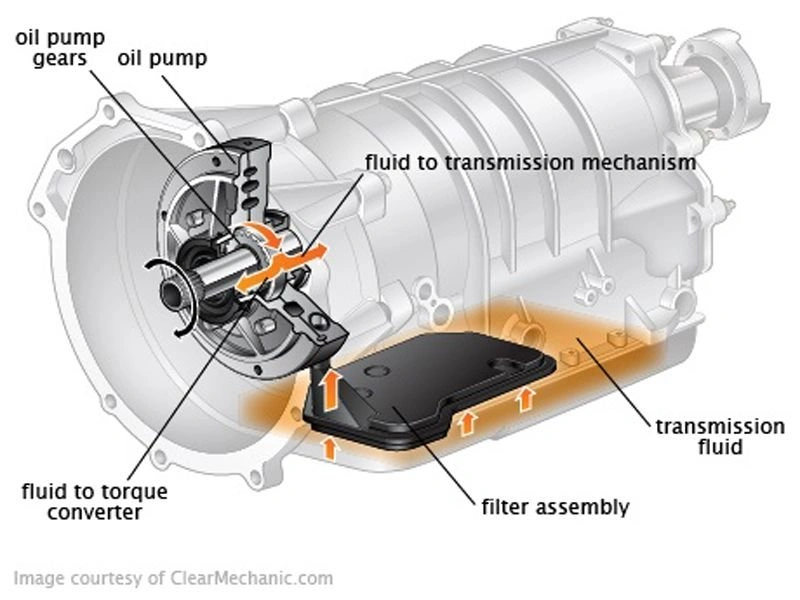
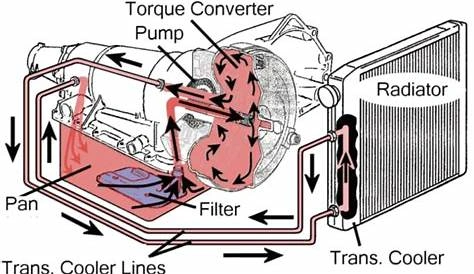
This architecture is very similar to how engine oil flows through an engine:
- Once the pump draws the oil, the very first step is passing through the filter.
- This ensures that only clean, filtered oil reaches the precision components (valves, solenoids, and bearings).
The Critical Importance of the Filter
Many owners worry when they see “sludge” or “shavings” at the bottom of the oil pan during a fluid change. However, as long as the filter is doing its job, those particles remain trapped at the bottom or within the filter medium, away from the sensitive valve body.
Types of Filter Designs:
- Traditional Metal Strainers: These usually feature a fine metal mesh. While they capture larger debris, they are less effective at trapping microscopic “clutch mud.”
- Dual-Filter Systems (High-Performance/Modern): These combine a coarse metal strainer in the pan with an external or secondary Paper Cartridge Filter. This setup provides superior protection for high-precision solenoids.
- Non-Replaceable Internal Filters: Some manufacturers have moved the filter deep inside the transmission casing. To change it, you must “split” the transmission open.
The Controversy of “Lifetime” Filters
If a transmission is designed so that the filter cannot be serviced, it essentially means the system will eventually become contaminated as the filter reaches its holding capacity. This design is often criticized by enthusiasts and mechanics as Planned Obsolescence—a design choice that prioritizes lower initial maintenance costs over the long-term durability of the vehicle.
Summary:
When performing a transmission service, changing the fluid is only half the job. If your vehicle allows it, always replace the filter/strainer. Keeping the “kidneys” of your transmission clean is the only way to ensure the valve body and torque converter survive for hundreds of thousands of miles.