The Physics of Battery Aging: Voltage, Internal Resistance, and Power Loss
Whether it’s a lithium-ion or lead-acid battery, the most obvious characteristic of aging is “charging quickly but dying instantly,” accompanied by severe heating. To understand these phenomena, we must start with the battery’s internal resistance and the equivalent circuit model.
1. The Equivalent Circuit Model of a Battery
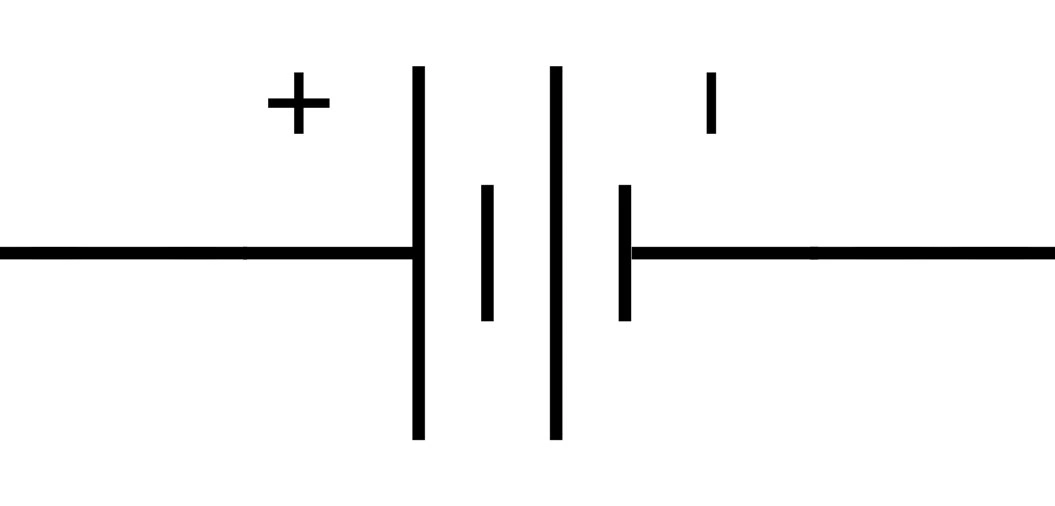
In physics, a battery is not a single energy storage component. Its equivalent circuit consists of two core parts connected in series:
- Chemical Electromotive Force (\(V_{ocv}\)): The voltage observed at the battery terminals under open-circuit conditions, with no load and no current flow..
- Internal Resistance (\(R\)): The physical obstruction generated when current flows through the plates, the electrolyte, and the separator.
(Translator’s note: Retaining your transitional note from the draft!) This is a great suggestion! Adding the concept of “power distribution” allows readers to see at a glance why aging batteries charge slowly—because most of the electricity is wasted as “heat.”
Here is the optimized paragraph, integrating this energy formula:
2. The Charging Phenomenon After Aging: Why Does It Get Hotter the More You Charge?
When we use a charger to charge a battery, the total power output by the charger (\(P_{total}\)) is broken down into two parts: \(P_{total} (V \times I) = P_{heat} (\text{wasted heat}) + P_{charge} (\text{actual power stored})\)
2.1 The Vertical Dive of Energy Efficiency
Let’s assume we use a 5V / 2A (total power 10W) charger. Let’s compare the energy conversion of a new vs. old battery:
| Battery State | Internal Resistance (\(R\)) | Heating Power (\(I^2 R\)) | Actual Charging Power | Efficiency |
|---|---|---|---|---|
| New Battery | \(0.1 \Omega\) | \(2^2 \times 0.1 = \mathbf{0.4W}\) | \(10 - 0.4 = \mathbf{9.6W}\) | 96% (Extremely High) |
| Old Battery | \(1.5 \Omega\) | \(2^2 \times 1.5 = \mathbf{6.0W}\) | \(10 - 6.0 = \mathbf{4.0W}\) | 40% (Extremely Low) |
Stop and think: In the old battery, over half of the power is consumed by the internal resistance $R$ and turns into waste heat. This is why an old battery feels like a “hand warmer” when charging, and the charging speed feels slower—because the power actually stored as chemical energy is less than half.
2.2 Voltage Deception: The Key to False Full Charges
The charger detects the terminal voltage: \(V_{measured} = V_{ocv} + (I \times R)\)
- The Illusion of an Old Battery: Because \(R\) is large, when a 2A current flows through, the resulting voltage drop \((I \times R)\) can be as high as 2V or more.
- The Result: As soon as the charger is connected, it detects the terminal voltage instantly soaring to 4.2V (the full charge threshold), immediately determines it is “fully charged,” and turns green or reduces the current. But in reality, the internal true storage \(V_{ocv}\) might still be at a very low power level.
This perfectly explains why an aging battery always “fills up instantly”—it’s an illusion caused by the voltage being falsely pulled up by internal resistance.
3. Voltage Collapse During Discharge: The Culprit Behind Power Outages
When a device draws current, the formula reverses: \(V_{measured} = V_{ocv} - (I \times R)\)
A Real-life Example: Your phone detects that if the voltage drops below 3.3V, it will automatically shut down. Assume the battery still has a residual voltage of 3.7V:
- New Battery (\(R=0.1\)): When playing a game and drawing a large current of 2A, the voltage drops to \(3.7 - 0.2 = \mathbf{3.5V}\) → Continues to run smoothly.
- Old Battery (\(R=0.5\)): Drawing the same large current of 2A, the voltage drops to \(3.7 - 1.0 = \mathbf{2.7V}\) → Falls below the threshold, and the phone instantly goes black.
This is why an old phone shows 20% battery left, but as soon as you open the camera or play a game, it crashes and shuts down due to the massive instantaneous voltage drop.
Conclusion: Aging is an Irreversible “Blockage”
If you compare a battery to a water tower, internal resistance is like rust and blockage in the outlet pipe:
- When charging: The pipe is clogged, so the water pressure (voltage) maxes out quickly, making you think it’s full, but water isn’t actually flowing in.
- When discharging: You want to use water, but the pipe blockage (internal resistance) is too large; the amount of water coming out is a trickle and can’t meet the immediate demand.
This increase in impedance caused by physical materials (plate crystallization, electrolyte degradation) is irreversible. Timely replacement of the battery is the only solution to ensure equipment safety and a stable power supply.
💡 Advanced Concept: Did you know internal resistance is divided into “AC” and “DC”?
If you check a battery’s spec sheet, you’ll often see two different internal resistance ratings. To avoid overcomplicating the physics, we can break it down simply:
AC Internal Resistance (ACIR): Instruments typically measure this by injecting a weak 1kHz alternating current. It only captures pure physical resistance (like contact points and electrolyte conductivity). Because the test is so brief, chemical reactions don’t have time to occur. As a result, the measured values look very appealing (very low). Almost 100% of handheld testers on the market measure ACIR.
DC Internal Resistance (DCIR): This is measured by actually connecting a load and continuously drawing a large direct current. In this state, the initial physical resistance is combined with “polarization resistance”—caused by the battery’s chemical reactions struggling to keep up with the power demand. This number will be much higher than ACIR, but it represents the actual, real-world resistance your phone or car experiences.
Note: To accurately reflect real-world usage scenarios, the voltage drop and heat generation formulas discussed in this article are all based on DC Internal Resistance (DCIR).