Why Do Lightweight Alloy Wheels Make Your Car Consume More Gas and Run Slower at High Speeds?
In the tuning world, there’s a golden rule: “One kilogram of unsprung weight equals ten kilograms of sprung weight.” To improve performance and fuel economy, many car owners spend a fortune upgrading to lightweight forged or flow-formed alloy wheels. Usually, they’ll upsize them at the same time. Seeing the wheels get larger while the weight drops off the scale is an incredibly satisfying feeling.
But the reality might be different from what the shop owner told you. Modifying your car with “extremely hollowed-out” lightweight wheels or excessively upsizing them is highly likely to result in sluggish initial acceleration, higher fuel consumption at highway speeds, and even compromised safety. With the popularization of Electric Vehicles (EVs), we are also seeing more automakers returning to closed-off “aero disc” wheel designs.
1. Core Concept: Low Speed is About Inertia, High Speed is About Drag
To understand the truth about wheel modifications, we must first divide driving scenarios into two categories:
- City (Low-Speed Range): During frequent starts and stops or navigating city streets, the vehicle primarily battles “weight” and “rotational inertia.” Swapping to lightweight alloy wheels of the “same size” will indeed reduce the burden on the engine, making take-offs feel noticeably lighter and more agile.
- Highway (Cruising Range): When speeds break past 100km/h and you enter high-speed cruising, the greatest source of resistance becomes “air.” At this point, aerodynamic design is vastly more decisive than weight.
2. The Physical Trap of Low Speeds: Lightweighting Can’t Save “Upsized, Widened Rotational Inertia”
If reducing weight makes initial acceleration faster, why do many people feel their cars become sluggish after a wheel upgrade? The biggest blind spot is thinking that only the total weight of the wheel matters, while ignoring the side effects of “upsizing and widening.”
- The Double Whammy of Outward Gravity Center and Width: When you upgrade from a 17-inch to a 19-inch wheel, or widen the rim from 7J to 8.5J, even if the wheel itself is lighter, the weight distribution is pushed significantly outward. Increasing the J-width also means adding more “rim” to the outer edge, which requires mounting a wider tire.
- Tires Are the Real Burden: Tires are usually heavier than alloy wheels, and they always sit at the absolute “outermost edge” of the wheel assembly. Increasing the diameter and tread width essentially moves the heaviest mass further away from the center while making it even heavier.
- The Reality of the Formula $I = mr^2$: Moment of inertia ($I$) is directly proportional to the square of the radius ($r^2$). The further the mass is from the center, the harder it is to rotate. Ultimately, what looks like “weight reduction” on paper turns into “maximized rotational inertia” in physics.
- The Consequences of Increased Rotational Inertia:
- Sluggish Acceleration: The engine or electric motor has to work much harder just to get the wheels spinning.
- Worse Handling: The strong gyroscopic effect makes the steering wheel feel heavier, and the vehicle’s dynamic response becomes sluggish. The shop owner might tell you this is it becoming “more stable.”
- Braking Burden: With greater rotational kinetic energy, the braking system needs more time to bring it to a halt, increasing your braking distance.
3. The Invisible Wall at High Speeds: The Cruel Reality of Drag Coefficient
As speeds increase, we have to face the ultimate test of fluid dynamics. We can find the clues in the drag equation:
\[F_D = \frac{1}{2} \rho v^2 C_D A\]In this formula, the most critical variable is velocity squared ($v^2$). When your speed increases from 70km/h to 140km/h, the speed doubles, but the aerodynamic drag explodes to 4 times its original value! At 140km/h, aerodynamic drag accounts for over 75% of the total resistance a car faces.
In this extreme environment, minor weight differences are practically irrelevant. Any design that can lower the drag coefficient ($C_D$) is the absolute key to saving fuel (or electricity) and maintaining high-speed power.
4. F1 Racing’s Inspiration and “Ventilation Drag”
If high speeds are all about aerodynamics, do wheels generate drag? The answer is: Yes, and a shocking amount of it.
Formula 1 cars have featured mandatory wheel covers since 2022, and for 2026, the FIA has introduced even stricter regulations governing wheel drag and aerodynamic development.
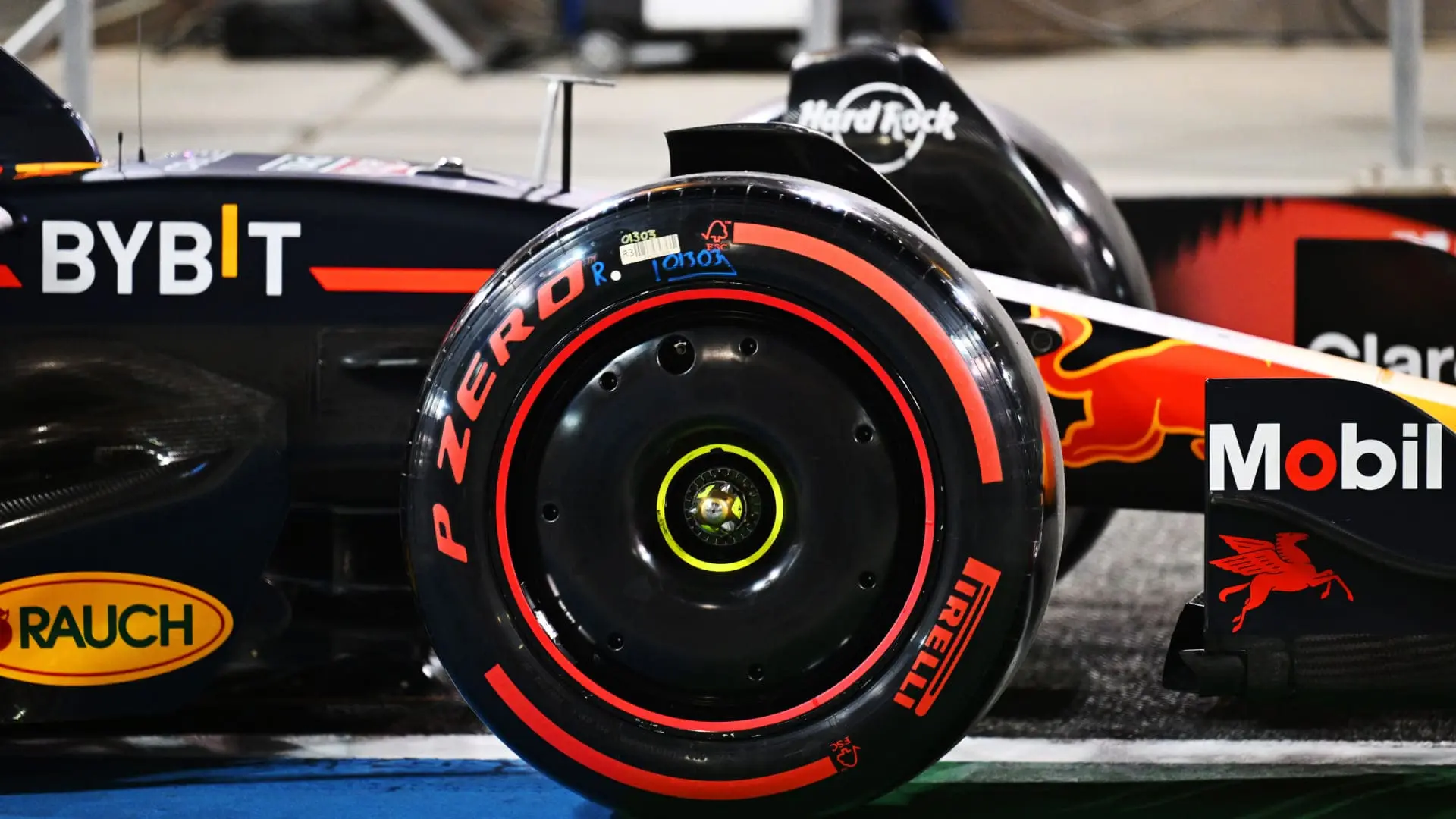 Image Source
- Wheels are Turbulence Generators: The “thin spoke, deep dish” designs popular in aftermarket wheels act like massive extractor fans when spinning at high speeds. The hollowed-out spokes continuously draw air in and chop it up, creating massive turbulence along the sides of the car.
- This is “Ventilation Drag”: According to wind tunnel tests, the air resistance generated around the wheels and wheel arches accounts for about 25% to 30% of the vehicle’s total aerodynamic drag. This explains why many car enthusiasts find they have to press the accelerator deeper to maintain high-speed cruising after installing cool, lightweight aftermarket wheels. The fact that F1 would rather sacrifice weight to add covers just to suppress turbulence proves that at high speeds, aerodynamics is king.
5. The EV Era and the Return of Aero Disc Wheels
For internal combustion engine (ICE) cars, a bit more aerodynamic drag just means slightly worse fuel economy. But for electric vehicles, drag directly dictates the fatal metric: “range.”
This is why cars like Teslas, the Porsche Taycan, or the Hyundai IONIQ series almost all come standard with incredibly flat, minimal-opening “low-drag wheels” or “aero covers.”
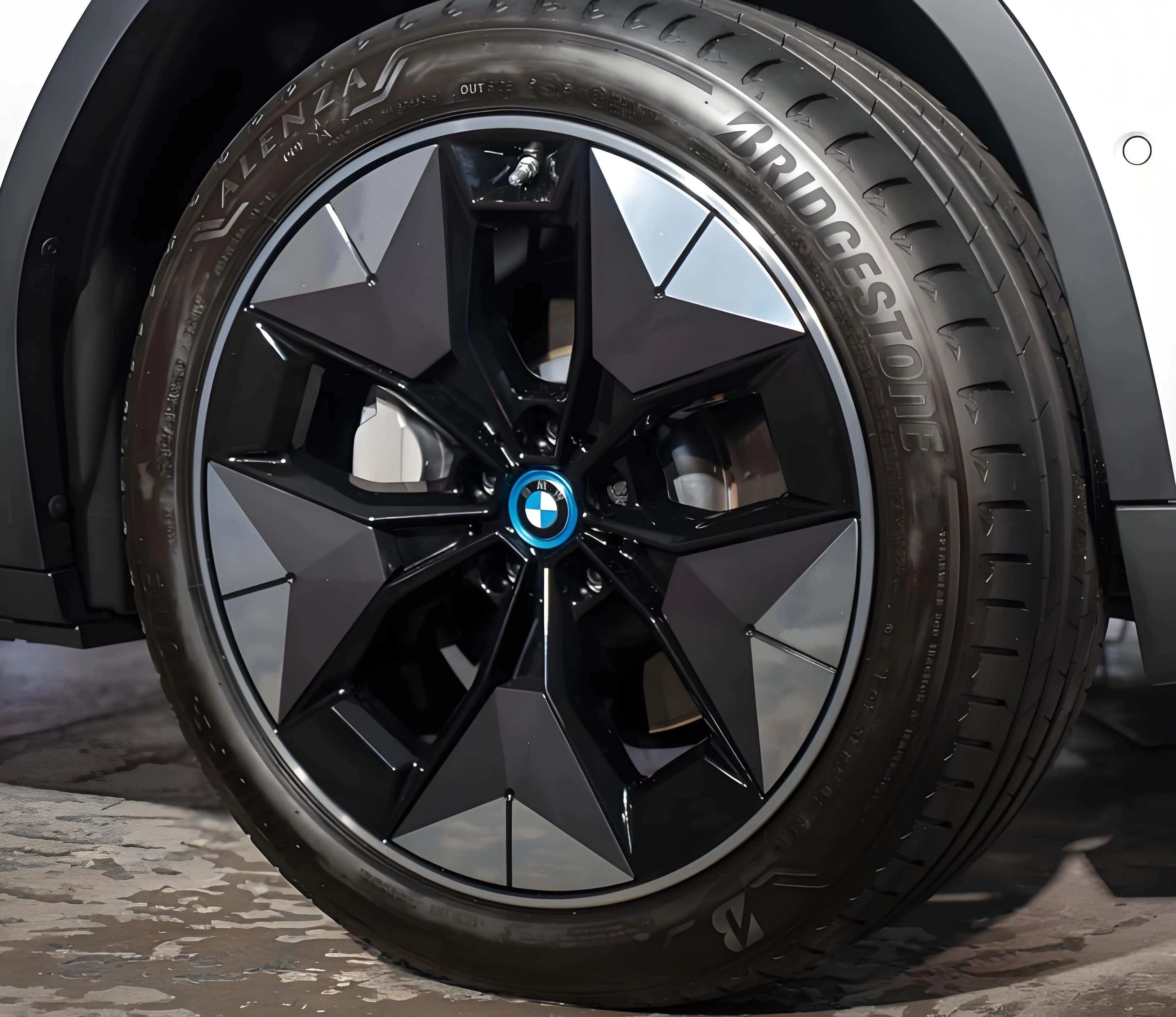
- Smooth Airflow Diversion: A closed-off design allows airflow to glide smoothly along the sides of the car, drastically reducing the amount of air getting sucked into the wheel arches.
- Real-World Differences: According to real-world testing by foreign automotive media, leaving aero covers on versus taking them off can result in a range difference of 3% to 5% during highway cruising. This explains why the stock wheels on Porsches or Teslas are often criticized for being ugly or heavy—but thanks to precise wind tunnel testing, they actually help the car drive further and smoother.
6. Conclusion: Modification Advice
- Primarily City Commuting: Upgrading to lightweight wheels is completely fine. If you keep the same size, your initial acceleration will indeed feel lighter and more agile. However, do not excessively upsize or widen them, as skyrocketing rotational inertia will cause sluggishness and dull handling dynamics.
- High-Speed Performance Enthusiasts / EV Owners: If you care about mid-to-high-speed rolling acceleration or your EV’s driving range, you need to drop the obsession with “extreme lightweighting.” Prioritize low-drag designs (flatter surfaces, wider spokes, closed-off outer edges).
Final Takeaway: If you want to balance aesthetics with performance, look to the aerodynamic logic of F1 and EVs. In the face of the laws of physics, weight isn’t always the most important thing.
References: PTT CAR board discussions, Formula 1 Technical Regulations