Car Parasitic Drain Testing (Advanced): Intermittent Wake-Ups & CAN-BUS Sleep
First, a quick reassurance: the basic methods in the first three guides solve over 80% of parasitic drain issues (such as dashcams, cabin lights, or alternator diode leaks). Beginners shouldn’t feel intimidated by this guide—only turn to these five advanced troubleshooting techniques when your total draw and fuse voltage-drop checks still hit a dead end.
Series Recap:
Non-invasive total draw measurement: Tester Switch Edition DC Clamp Meter Edition - No-pull circuit isolation: Fuse Voltage Drop Edition
1. Rule Out “False Drains”: Battery Self-Discharge & IBS Smart Charging
Before spending hours hunting a leak, confirm the power loss isn’t caused by the battery itself or modern charging logic:
1. Battery Self-Discharge Test
An aging battery with internal micro-shorts will go dead in a couple of days even when completely disconnected from the car:
- Fully charge the battery, disconnect the negative terminal clamp, and wait 1 hour for surface charge to settle. Record the initial voltage (a healthy full battery reads
12.6V ~ 12.7V). - Leave it disconnected for 24 hours and recheck: a drop of
< 0.05Vmeans the battery is fine; if it drops noticeably (e.g., below12.2V), replace the battery.
2. “False Dead Battery” from IBS / BMS Smart Charging
Modern vehicles with Intelligent Battery Sensors (IBS / BMS) typically charge the battery only to 75% ~ 80% during normal driving to save fuel. If you only take 10–15 minute short trips, the battery stays near its lower threshold and can fail to crank in cold weather or after sitting a few days. Always fully charge the battery and verify its CCA health before chasing a parasitic draw.
2. All Fuses Read 0.0 mV Yet Draw Is High? The 5 Blind Spots
When total draw is hundreds of mA but every blade fuse reads 0.0 mV, the current is taking a path invisible to the standard voltage-drop test:
- Direct High-Current Feeds (Bypassing Blade Fuses): Most commonly a shorted alternator B+ cable diode (see the Clamp Meter Guide), followed by battery-direct starter solenoids, electric cooling fans/water pump modules, and bolted main distribution fuses (Megafuse / Multi-block Fuse) at the positive battery post.
- High-Amperage Fuses (30A ~ 60A+): Their internal resistance is tiny (often
< 2 mΩ). A100mAdraw produces under0.1mVof drop, which easily reads0.0 mVon a multimeter. Fix: Clamp a 2A-range DC clamp meter directly around the thick feed wire behind the fuse. - Sealed Box Fuses (JCASE / Maxi): Many engine-bay fuses have sealed tops with no exposed metal test points. Use a DC clamp meter on the output wire or a thermal camera instead.
- Missed Secondary Fuse Boxes: Beyond the engine bay and driver dash, many cars hide extra fuse boxes in the trunk side panel, under the rear seat, beside the battery, or under the passenger footwell. Check your owner’s manual for every location.
- Aftermarket Accessories Wired Direct to Battery: Dashcam hardwire kits, subwoofer amplifiers, auxiliary lights, or radios wired straight to the positive battery post never pass through the factory fuse box.
3. Tests Normal (30mA) Now, Dead in Two Days: “Intermittent Phantom Wake-Ups”
After locking, modern cars step down in stages (e.g., 3A → 0.8A → 0.03A). If draw drops below 30mA while you watch, yet the battery still dies overnight, something is repeatedly waking the car up with periodic spikes back to 0.5A ~ 3A.
Check these 4 common DIY culprits first:
- Keyless Door Handle Sensors: Moisture from rain or car washes triggers false touch detection overnight.
- Smart Key Kept Too Close: Parking outside your front door or garage with the key fob within 3–5 meters keeps the car continuously handshaking.
- OBD2 Plug-In Devices: Bluetooth HUDs, GPS trackers, or diagnostic dongles left plugged in can poll the bus periodically (unplug all OBD2 accessories before testing).
- Telematics / SOS Modules: Weak cellular reception in underground garages causes constant reconnect attempts.
Advanced Tip: You can’t catch midnight wake-ups by staring at a screen. Use a Bluetooth multimeter or clamp meter with Data Logging alongside a bypass switch (Tester Switch Guide) to record a 12–24 hour curve and spot periodic current spikes.
4. Found the Drawing Circuit, Still Can’t Fix It: CAN-BUS Not Sleeping
Modern ECUs wake each other over CAN-BUS / LIN-BUS. When a cluster or Body Control Module (BCM) fuse draws 300mA, the module itself is often fine—it’s simply being kept awake by a faulty sensor elsewhere on the network (such as a water-damaged rain sensor or door handle antenna on LIN-BUS).
1. Non-Invasive Check: Probe OBD2 for CAN-BUS Sleep
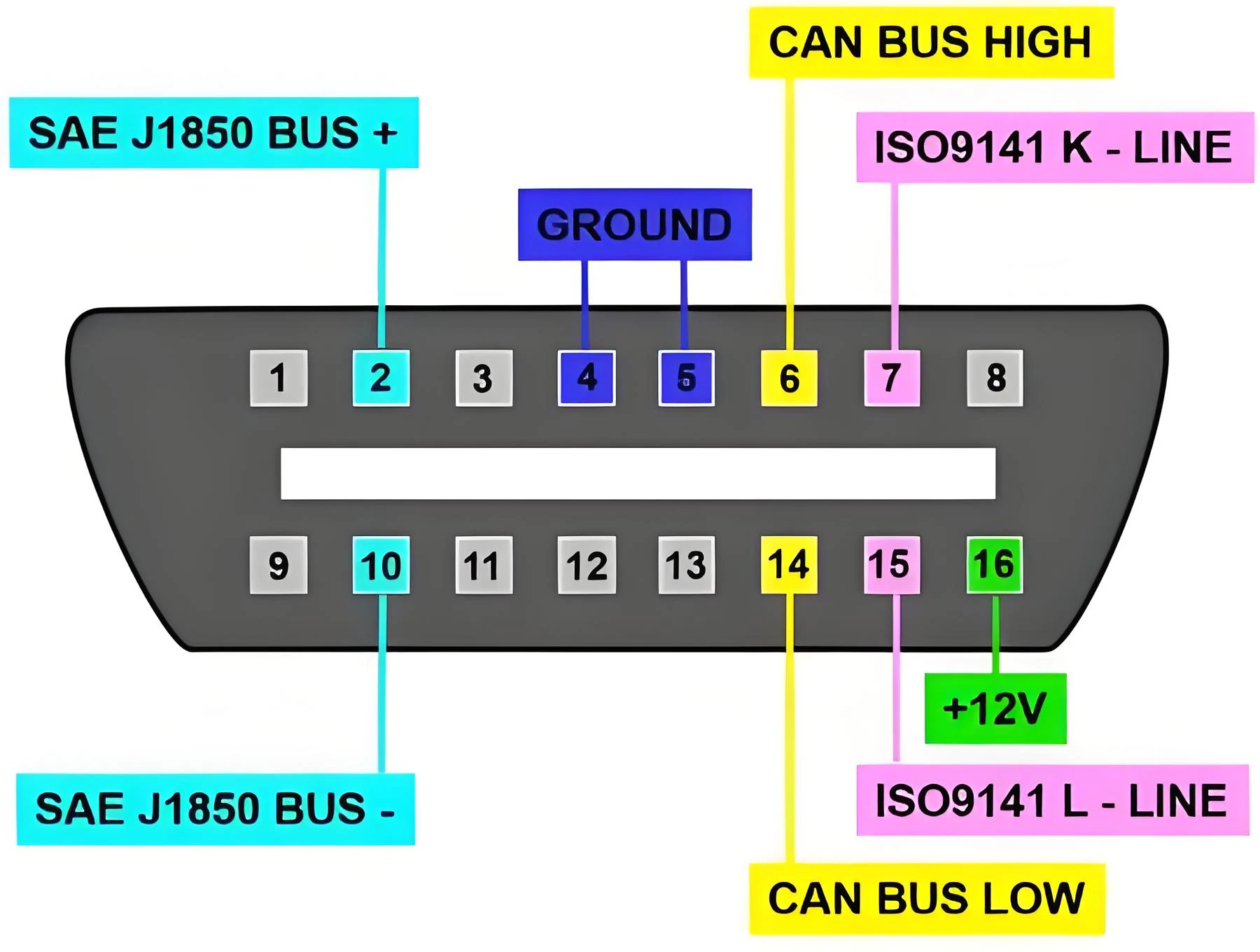
Set your multimeter to DC V and probe gently with fine needle tips (avoid forcing thick probes into the female pins):
- Measure CAN-H: Red probe on Pin 6, black probe on Pin 4 (or Pin 5 ground).
- Measure CAN-L: Red probe on Pin 14, black probe on Pin 4 (or Pin 5).
How to read the results:
- Deep Sleep: Both readings drop close to
0.0V. - Still Awake (Active): CAN-H hovers around
2.5V ~ 2.8Vand CAN-L around2.2V ~ 2.5Vwith slight fluctuations, meaning a module is still talking on the bus.
Two Crucial Caveats:
- Gateway Isolation: Many newer cars use a Central Gateway (SGW) that isolates the OBD2 port at
0.0Vwhen no scan tool is connected—even if interior buses are wide awake. In that case, probe an interior CAN Hub instead.- Never Use Ohms/Amps Mode: Measuring OBD2 pins on resistance or current settings can short and damage transceivers.
2. Advanced Isolation: Unplug “Comms,” Not “Fuses”
Once you confirm the bus isn’t sleeping, monitor total draw and locate the vehicle’s CAN Distribution Hub. Unplug node connectors one at a time (cutting communication without cutting power). When unplugging a specific connector causes bus voltage to drop to 0V and total draw to step down below 30mA within seconds, you’ve found the true wake-up culprit.
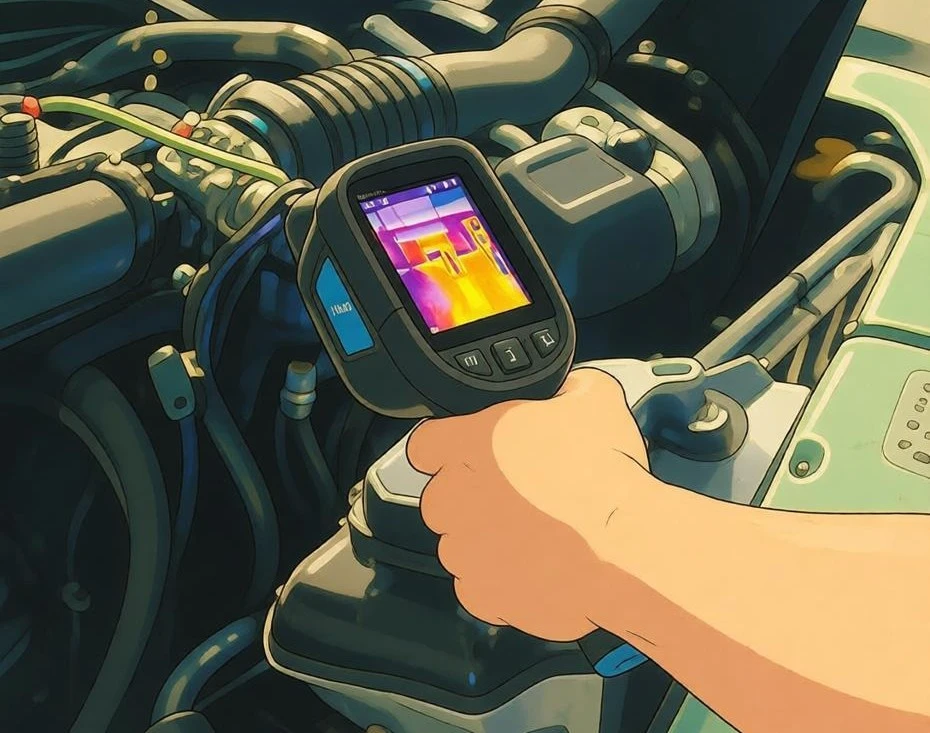
5. Visual Shortcut: Smartphone Thermal Camera
When harnesses are cramped or moisture is hiding under carpets or inside door panels, a smartphone-attachable thermal camera is a huge time-saver. Any component continuously wasting 100mA ~ 300mA+ (a continuously energized relay coil, leaking IC, poor contact, or corroded connector) will glow 2°C ~ 5°C warmer than its surroundings.
- Practical Tips: Let the entire car cool down completely (parked 2–3+ hours or overnight) before scanning. Focus on fuse boxes, relays, common water-ingress zones (sunroof drains, under carpets, spare tire well), and aftermarket add-ons. Avoid reading bare shiny metal directly, as it reflects ambient heat.
6. Advanced DIY Troubleshooting Checklist
- Rule Out the Battery: Disconnect the negative cable for 24 hours to check resting voltage and rule out self-discharge or IBS undercharging.
- Strip External Add-Ons: Unplug all OBD2 dongles and 12V socket accessories, and move smart keys far away.
- Total Draw & Voltage Drop: Check total draw and alternator B+ with a DC Clamp Meter, then scan all fuse boxes (including hidden ones) via Voltage Drop.
- If All Fuses Read
0.0 mV: Check direct feeds (alternator, cooling fan, starter), clamp-test high-amp/JCASE fuses, and inspect battery-direct aftermarket wiring. - Sleeps Now, Dead Tomorrow: Run a 12–24 hour data logger overnight to catch phantom wake-ups (check Keyless handles and telematics).
- Circuit Found, Problem Persists: Probe OBD2 Pin 6/14 (or the CAN Hub) to check for bus wake-ups, and scan for hot spots with a thermal camera.