DIY Engine Oil Change Disposal Guide: Where to Dispose of Used Motor Oil When Garages and Gas Stations Refuse It?
For automotive and motorcycle enthusiasts who love DIY maintenance, picking premium synthetic oil, loosening the drain bolt, and spinning on a fresh oil filter not only saves on labor costs but also provides an intimate, first-hand understanding of your machine’s mechanical health. However, in recent years, many home mechanics face an unprecedented predicament once the wrench is put away: “Where on earth am I supposed to dispose of this pitch-black used oil?”
In the past, corner motorcycle shops, neighborhood garages, and local petrol stations welcomed drivers to empty waste oil into their large drums. Today, more and more shops hang up signs stating “No Outside Waste Oil Accepted” or “Oil Dumps Restricted to In-House Service Only.” What is the reason behind this trend, and how can we dispose of used motor oil legally, safely, and cleanly?
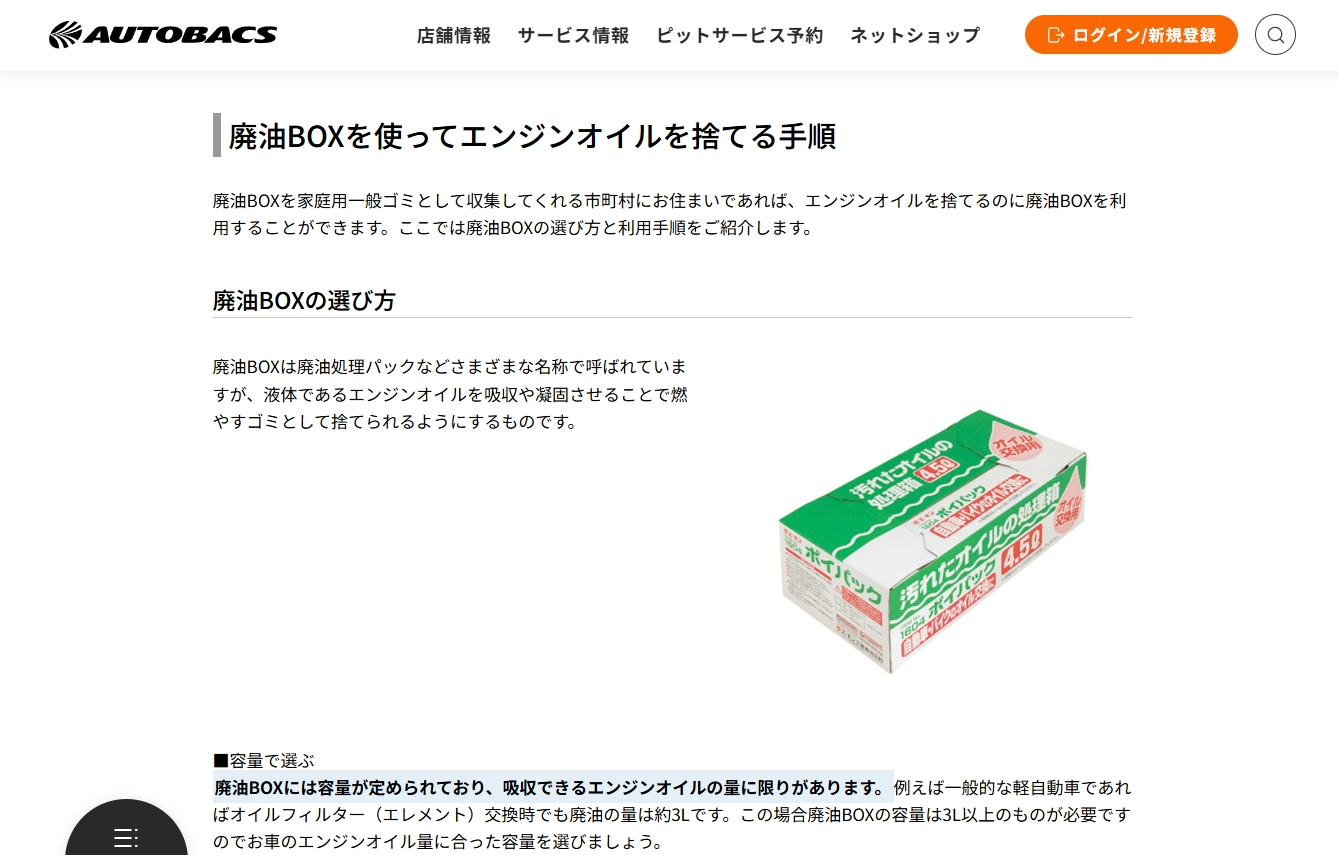 Reference: AUTOBACS Official Brand Site 《固める? 吸わす? 燃やす? 引き取り?エンジンオイルの正しい廃棄方法を紹介》
The Japanese DIY Solution: The Waste Oil Disposal Box (廃油BOX)
Japan has one of the world’s most mature automotive DIY cultures. The official guide from leading automotive retailer and service chain AUTOBACS: “Solidify? Absorb? Burn? Drop off? A Guide to Proper Engine Oil Disposal” compares different disposal methods and highlights the practical workflow of using a dedicated “Waste Oil Box (廃油BOX / 廃油処理パック)”:
Four Key Structural Components of a Waste Oil Box
A waste oil box may look straightforward, yet every component is carefully engineered for the real-world conditions of oil changes. Taking the ASTRO PRODUCTS Oil Disposal Box 4.5L (オイル処理ボックス 4.5L)—a well-known Japanese professional tool brand—as an example, its contents list clearly reveals four critical layers of defense:
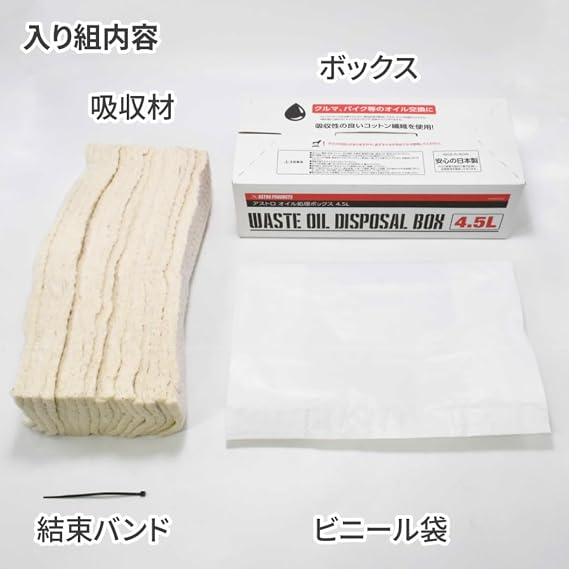 Image credit: Amazon.co.jp - オイル処理ボックス 4.5L | ASTRO PRODUCTS
- Outer Compression-Resistant Carton (ボックス): Provides rigid ground support and thermal insulation, preventing hot oil from contacting the floor directly and stopping the plastic liner from tipping under the force of draining oil.
- High-Density Absorbent Material (吸収材): Utilizes multi-layered pure cotton fiber or polymer absorbent fluff to rapidly disperse and trap several liters of liquid motor oil, effectively solidifying it and eliminating fluid sloshing.
- Heat-Resistant Leak-Proof Liner (ビニール袋): A puncture-, oil-, and heat-resistant heavy-duty plastic bag acting as the primary leak barrier.
- Dedicated Sealing Cable Tie (結束バンド): The single most vital component ensuring “zero leakage and zero odor”!
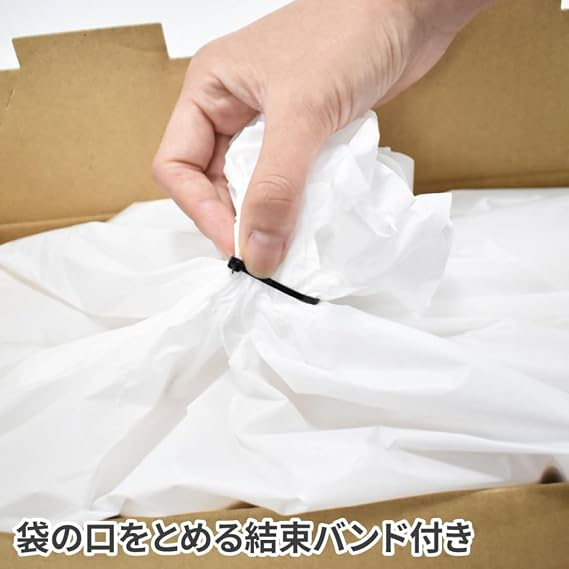 Image credit: Amazon.co.jp - ASTRO PRODUCTS 4.5L Oil Disposal Box Details
Why Is the Cable Tie (結束バンド) the True Soul of the System?
After draining, the liner holds 3 to 5 kilograms of hot, dense oil. Relying merely on “hand-tying a knot in the plastic bag” introduces severe risks:
- Micro-Gaps from Thick Folds: The liner material is heavy-gauge plastic. Hand knots leave microscopic creases and channel gaps. Once the bag shifts or tilts during transport, seepage is only a matter of time.
- Reduces Usable Internal Volume: Tying a knot consumes substantial bag length, squeezing internal absorbent material upward and potentially pushing unabsorbed residual oil toward the opening.
- Superior Bite Force and Total Airtightness: Using the included high-tensile nylon cable tie (結束バンド), gently purge excess air, twist the bag neck into a tight rope shape, and cinch the cable tie firmly at the root. Even if the box rolls over or is knocked upside down during transport, neither fumes nor oil will escape!
| Capacity Specification | Recommended Vehicle Types | Oil Filter Replacement Allowance |
|---|---|---|
| 2.5 L | Small/medium displacement scooters, lightweight motorcycles | Ample capacity (most bikes take 0.8L – 1.5L) |
| 4.5 L | Standard 4-cylinder petrol cars, K-Cars, heavyweight motorcycles | Standard oil capacity for 4-cylinder sedans/hatchbacks |
| 6.5 L | 6-cylinder engines, turbo SUVs, diesel passenger cars | Large displacement engines or vehicles with high oil sump capacity |
Regulatory Note (Japan vs. Other Regions): In Japan’s municipal waste system, most local authorities permit waste oil boxes sealed with cable ties to be collected as “combustible household trash (燃やすゴミ)”. In regions such as Taiwan, however, strict municipal incinerator and air quality regulations classify waste lubricating oil as an independently recycled item. Therefore, when using such boxes outside Japan, their primary advantages lie in preventing workspace oil splatter and guaranteeing spill-free transportation, with final disposal adhering to local recycling rules.
Four Golden Rules of Used Oil Handling
- Never Pour Oil Down Drains, Sewers, or onto Soil: A single liter of motor oil can contaminate nearly one million liters of clean freshwater and groundwater reserves. Violating water pollution and waste disposal laws carries severe legal penalties and substantial fines.
- Never Mix Different Fluids: Re-refining used lubricating oil into heavy fuel oil or base stocks requires high chemical purity. Never mix engine coolant (ethylene glycol), brake fluid (glycol ethers), gasoline, or wash water into the waste oil container.
- Avoid Fragile Containers (e.g., Thin PET Water Bottles): Thin mineral water bottles (PET) have narrow openings, making pouring messy. Worse, hot oil softens and deforms thin plastic, and they easily puncture or burst under pressure in a car trunk, creating a disastrous mess.
- Proper Handling of Used Spin-On Oil Filters: A removed metal oil filter contains residual oil. Stand it upside down and let it drain for at least 12 hours. The drained oil should be added to the waste oil bottle, while the drained steel canister can be recycled as scrap metal.
Conclusion: Enjoy DIY with Confidence and Environmental Responsibility
Changing your own oil is one of the most rewarding ways to connect with your vehicle. “Finishing the job properly with responsible waste disposal” is the true mark of a mature, skilled enthusiast. Whether by sealing used oil in original HDPE bottles for municipal collection or using Japanese-style absorbent boxes with heavy-duty cable ties (結束バンド) for clean transit, you can save money while keeping your garage and our planet clean!