W205 Oil Change: Extraction or Drain? Oil Pan Design Explained
Mention the Mercedes-Benz W205 (especially the C300), and car enthusiasts often joke about its reputation and internet memes. Yet if you look past the stereotypes and evaluate the actual hardware, the W205 is a remarkably high-value way to enjoy authentic European driving dynamics.
On today’s used market, pre-facelift M274 models often sell for less than the price of a new mainstream compact car—yet deliver a longitudinal rear-wheel-drive platform, staggered wheels, cross-drilled rotors with multi-piston calipers, front and rear multi-link aluminum suspension, acoustic glass, and a low-drag underbody. It strikes an impressive balance between handling, highway stability, and ride refinement.
Seeing that spec sheet, many people assume maintenance must be intimidating and expensive. In reality, the exact opposite is true. Once you inspect the W205 (M274 engine) and many other European platforms (such as the VW/Audi EA888), you’ll discover they were engineered from the factory to excel at top-side DIY oil extraction.
1. Oil Pan Teardown: The Extraction Tube Reaches the Lowest Plane
The biggest skepticism around DIY oil extraction is whether it leaves sludge or old oil behind. One look at the removed upper and lower oil pan of a W205 M274 engine settles the debate (this same engine also powers the E-Class W212/W213, GLC X253, SLC R172, and Infiniti Q50/Q60 2.0t, so the maintenance logic is identical):
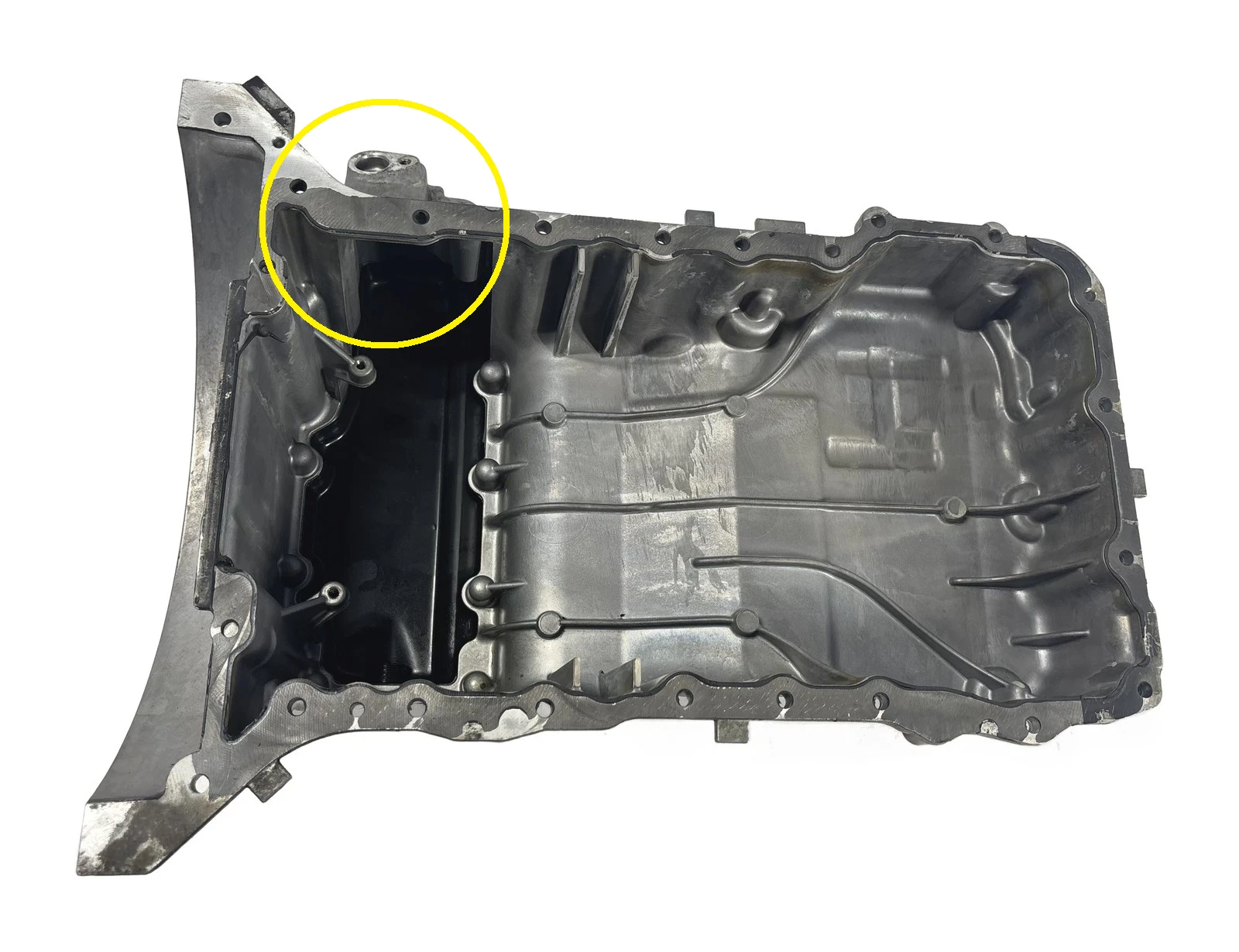 M274 oil pan interior view: the black section on the left is the deep rear sump (transmission side) with a completely flat, unobstructed floor; the yellow circle marks the dipstick tube port directly above it.
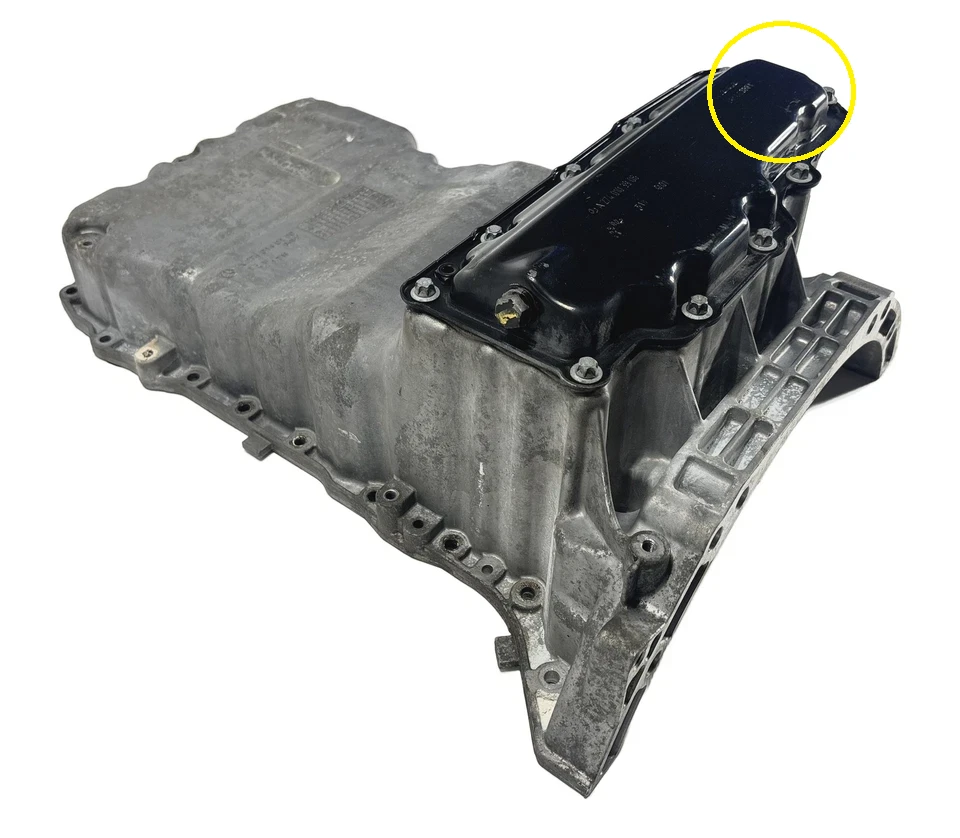 M274 oil pan exterior view: cast aluminum upper pan bolted to a flat black steel lower sump; the yellow circle marks where the dipstick tube meets the bottom plane—at the exact same lowest level as the drain plug on the opposite end.
Image source: 2015-2019 MERCEDES C300 E300 GLC300 2.0L (M274) ENGINE UPPER & LOWER OIL PAN | eBay
These two photos prove two critical engineering details:
- Rear-Sump Layout: To clear the front subframe and steering rack, the M274 (just like the classic W210 M111) uses a shallow-front, deep-rear design with cast guide ribs that channel oil directly into the rear sump.
- Flat Floor with Direct Dipstick Access: The bottom of the black lower sump is completely flat with no baffles blocking the tube. Comparing the yellow circles in both photos, an extractor tube fed down the dipstick guide reaches the exact same lowest plane as the drain plug—pulling out virtually the same volume of oil on level ground as draining from underneath.
2. Why European Cars Are Ideal for DIY Oil Changes
- Top-Mounted Cartridge Oil Filter: The W205 (M274) and most European engines place the eco-style cartridge oil filter right on top of the engine bay. With the right socket (27 mm for the M274), you can swap it standing up—cleanly, without crawling under the car or getting hot oil on your arms.
- No Underbody Shield Removal & Zero Drain-Plug Risk: Skip the jack, jack stands, and removing a dozen undertray bolts. You also eliminate the risk of stripping aluminum/composite oil pan threads or dealing with drain-plug leaks.
- Factory-Approved Method with Exact Measurement: Many Mercedes dealerships and European specialists in Europe follow WIS procedures using vacuum extractors. The graduated markings on an extractor tank also let DIYers verify exact oil volume removed—and monitor whether the engine consumes oil.
3. Practical Extraction Tips for a Thorough Oil Change
Watch this step-by-step W205 C300 DIY oil extraction and filter replacement demonstration:
- Warm Up, Shut Off, and Rest 5–10 Minutes: Warm oil (~60–80°C) flows quickly, and resting lets oil from the upper valvetrain drain into the pan. Avoid extracting immediately after high-speed driving when scorching oil can soften nylon tubing.
- Loosen the Oil Filter Cap First: Crack open and slightly lift the top-mounted filter cap before pumping so trapped oil in the filter housing drains down into the sump to be extracted together.
- Keep Level (or Slightly Nose-Up) & Don’t Force the Tube: Stop as soon as the tube gently touches the bottom plate—never jam it down hard (which can curl or seal the tip). When you hear air at the end, gently move and rotate the tube a few millimeters to draw the last bit out (W205 M274: ~6.5–7.0 L; W210 M111: ~5.3–5.5 L).
- Replace O-Rings & Torque to Spec: Always install the new O-rings included with the filter (lightly lubricated with fresh oil) and torque the cap to spec (typically 25 Nm).
- Dispose of Used Oil Responsibly: Pour the extracted oil back into the empty oil jugs and recycle it properly. For disposal details and tips, see our DIY Engine Oil Change Disposal Guide.
4. Before You Start: Not Every European Car Has a Dipstick Tube
Many newer European engines have eliminated the physical dipstick and guide tube altogether—including most modern BMWs and newer Mercedes-Benz M264 / M254 engines (such as the facelift W205 and W206). Those still require traditional bottom draining. Always pop the hood first to confirm a physical dipstick or factory extraction tube; if your car has one, DIY maintenance has never been cleaner or easier!